Remove Search.onfireshield.com browser hijacker virus from your computer by reading my virus removal guide.
First and foremost, let’s find out what Search.onfireshield.com is before we can discuss how to remove it. Further knowledge of this threat will aid you in recognizing similar threats quickly in the future.
By taking a closer look at it, it becomes apparent that Search.onfireshield.com is more than just a mere browser tool; it is a browser hijacker. This means that everytime you open your internet browser, it secretly compels you to visit a specific website (Search.onfireshield.com).
This happens after it has been installed by slyly modifying your web browser’s settings.
The sneaky thing about Search.onfireshield.com is how it gets onto your PC. Sometimes, people unknowingly add this software as they might think that their browsing experience could be better or when it comes bundled with other programs so they do not see any harm in installing them. Once installed however, such programs change your search results and home pages which now point to the Search.onfireshield.com without your consent.
What makes this even annoying is that while trying to go back to your usual sites, you still keep ending up on this hijacker instead. That’s not just inconvenient; also remember that there are privacy issues associated with spammers who always track users’ online activities.
What exactly is Search.onfireshield.com?
Positioning itself as an easy-to-use homepage option for users looking for smooth browsing experiences, Search.onfireshield.com is not what it claims to be on the surface. This software operates as a browser hijacker at its core.
When we say browser hijackers modify settings within your web browser without receiving permission from the user, one of clear indications of their influence can tell when they change the default search engine and take over any new tabs’ homepages, redirecting them to their own site — in this case: Search.onfireshield.com.

Search.onfireshield.com browser hijacker
Summary:
- Search.onfireshield.com presents itself as a handy homepage option and search tool.
- It claims to offer seamless browsing experiences to users.
- It is a browser hijacker.
- It modifies settings within your web browser without permission.
- It alters the default search engine and takes over the new tab’s homepage.
- It redirects the homepage to its page.
Search.onfireshield.com domain WHOIS record:
[whois website="Search.onfireshield.com"]
Search.onfireshield.com domain age:
[domain_age domain="Search.onfireshield.com"]
Why is Search.onfireshield.com Harmful?
Although Search.onfireshield.com might initially appear harmless or useful, it conceals its primary intent: data collection. The browser hijacker is designed to gather various data from your web activities. This could range from your search histories, visited websites, and interactions on specific sites to personal data like location, IP address, and more.
The data amassed by Search.onfireshield.com isn’t merely stored; it’s actively monetized. It is often sold to advertising networks, thereby allowing tailored ads to be shown to you, often in an intrusive manner. The barrage of targeted ads isn’t just annoying; it can slow browsing and expose you to potential threats.
Additionally, because Search.onfireshield.com extracts data without users’ explicit consent, it’s tagged as a potentially unwanted program (PUP). The PUP classification is reserved for programs that might not be malicious, like viruses, but can pose risks or annoyances to the user.
Summary:
- Search.onfireshield.com is a browser hijacker that collects data from users’ web activities
- It collects information such as search histories, visited websites, and personal data like location and IP address
- The collected data is monetized and sold to advertising networks for targeted ads
- This can lead to annoying and intrusive ads, as well as potential browsing issues and security threats
- Search.onfireshield.com is considered a potentially unwanted program (PUP) because it extracts data without explicit user consent
How Does Search.onfireshield.com Spread?
Even though Search.onfireshield.com might seem harmless or beneficial at first sight, it masks its major purpose – to collect data. Most often, browser hijackers extract all possible information from your web activities.
It can include the search history, visited pages and actions in some websites to personal data like our location and IP address.
The collected information by Search.onfireshield.com is not just stored; it is actively monetized. By selling these data to advertisement networks, you are able to see personalized ads most times annoyingly popping up on your device. The incessantness of directed advertisements does not only bother; but likewise slows down the internet while exposing you to threats.
Additionally, as Search.onfireshield.com takes hold of users’ data without their explicit permission it classifies it as potentially unwanted program (PUP). However, PUPs are programs that may not be harmful like viruses but may pose risks or annoyances to a user.
Summary:
- Search.onfireshield.com is a browser hijacker that captures user’s online activity
- It gathers such information as search histories, visited sites and also individuals’ private details like places of residence and IP addresses
- The information gathered is commercialized through selling them advertising agencies hence leading to targeted ads
- These are irritating and intrusive ads that can result in browsing issues as well as security threats
How to remove Search.onfireshield.com browser hijacker?
Step 1: Remove the Search.onfireshield.com browser extension
First, we will remove the extension for Search.onfireshield.com from the browser. Follow the instructions for the browser you have set as your default browser. Make sure you remove the permission for Search.onfireshield.com from the browser settings. To do so, see the steps below for the corresponding browser.
 Google Chrome
- Open Google Chrome.
- type: chrome://extensions/ in the address bar.
- Search for the “Search.onfireshield.com” browser extension and click the “Remove” button.
It is essential to check every extension installed. If you do not know or do not trust a installed browser extension, remove or disable it.
 Firefox
- Open Firefox browser.
- type: about:addons in the address bar.
- Search for the “Search.onfireshield.com” browser add-on and click the “Remove” button.
It is crucial to check every addon installed. If you do not know or do not trust a specific addon, remove or disable it.
 Microsoft Edge
- Open the Microsoft Edge browser.
- type: edge://extensions/ in the address bar.
- Search for the “Search.onfireshield.com” browser extension and click the “Remove” button.
It is essential to check every extension installed. If you do not know or do not trust a specific extension, remove or disable it.
 Safari
- Open Safari.
- In the top left corner, click on the Safari menu.
- In the Safari menu, click on Preferences.
- Click on the Extensions tab.
- Search for the “Search.onfireshield.com” browser extension and click the “Uninstall” button.
It is vital to check every extension installed. If you do not know or do not trust a specific extension, uninstall the extension.
Step 2: Remove Search.onfireshield.com notifications
Remove Search.onfireshield.com notifications from Google Chrome
- Open Google Chrome.
- In the top-right corner, expand the Chrome menu.
- In the Google Chrome menu, click on Settings.
- At the Privacy and Security section, click on Site settings.
- Next, click the Notifications settings.
- Remove Search.onfireshield.com by clicking the three dots on the right next to the Search.onfireshield.com URL and Remove.
→ Protect your computer with Malwarebytes.
 Remove Search.onfireshield.com notifications from the Android
- Open Google Chrome
- In the top-right corner, find the Chrome menu.
- In the menu, tap Settings, and scroll down to Advanced.
- In the Site Settings section, tap the Notifications settings, find the Search.onfireshield.com domain, and tap on it.
- Tap the Clean & Reset button and confirm.
→ See the next step: Malwarebytes.
Remove Search.onfireshield.com notifications from Firefox
- Open Firefox
- In the top-right corner, click the Firefox menu (three horizontal stripes).
- In the menu, click on Options.
- In the list on the left, click on Privacy & Security.
- Scroll down to Permissions and then to Settings next to Notifications.
- Select the Search.onfireshield.com URL from the list, and change the status to Block, save Firefox changes.
→ See the next step: Malwarebytes.
Remove Search.onfireshield.com notifications from Edge
- Open Microsoft Edge.
- Click on the three dots in the top right corner to expand the Edge menu.
- Scroll down to Settings.
- In the left menu, click on Site permissions.
- Click on Notifications.
- Click on the three dots on the right of the Search.onfireshield.com domain and Remove them.
→ See the next step: Malwarebytes.
Remove Search.onfireshield.com notifications from Safari on Mac
- Open Safari. In the top left corner, click on Safari.
- Go to Preferences in the Safari menu and open the Websites tab.
- In the left menu, click on Notifications
- Find the Search.onfireshield.com domain and select it, and click the Deny button.
→ See the next step: Malwarebytes.
Step 3: Uninstall Search.onfireshield.com software
In this second step, we will check your computer for adware software. In many cases, adware is installed by you as a user yourself. This is because adware is bundled with other software you can download for free from the Internet.
Search.onfireshield.com is then offered as a helpful tool or an “offering” during installation. If you do not pay attention and quickly click through the installation process, you will install adware on your computer. Thus, this is done misleadingly. If you want to avoid this, you can use Unchecky software. Using the steps below, check for adware installed on your computer and remove it.
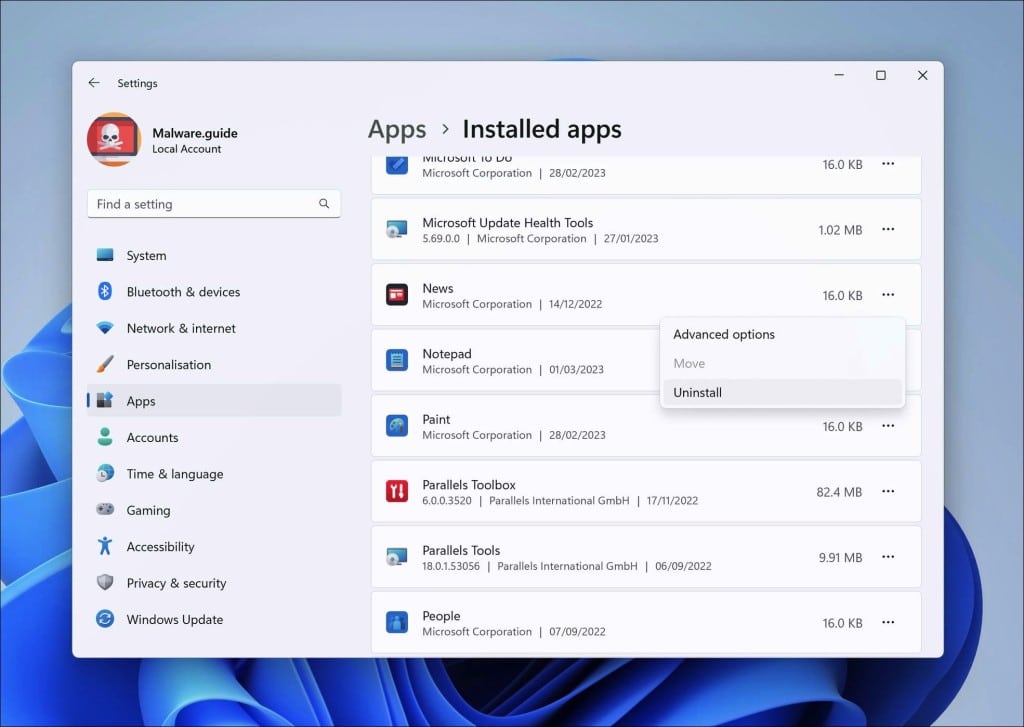
Windows 11
- Click on “Start.”
- Click on “Settings.”
- Click on “Apps.”
- Lastly, click on “Installed apps.”
- Search for any unknown or unused software in the list of recently installed apps.
- On the right-click on the three dots.
- In the menu, click on “Uninstall.”
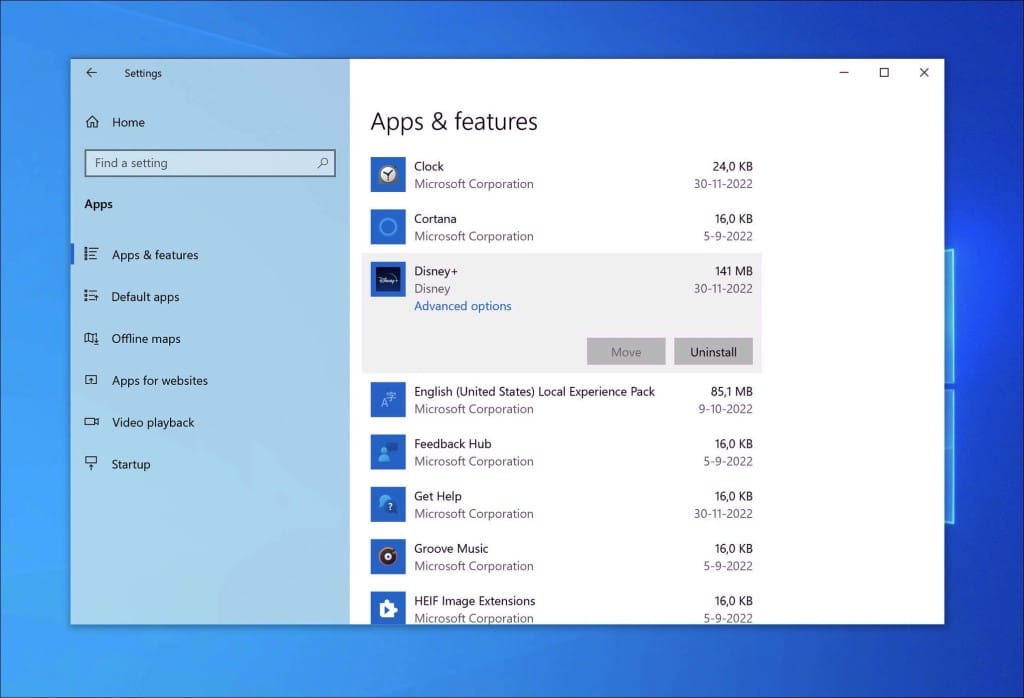
Windows 10
- Click on “Start.”
- Click on “Settings.”
- Click on “Apps.”
- In the list of apps, search for any unknown or unused software.
- Click on the app.
- Lastly, click on the “Uninstall” button.
Step 4: Scan your PC for Search.onfireshield.com
Now that you have uninstalled adware apps, I advise you to check the computer for any other malware for free.
It is not recommended to remove malware manually because it can be difficult for non-technical people to identify and remove all the traces of malware. Manually removing malware involves finding and deleting files, registry entries, and other often hidden details. It can damage your computer or leave it vulnerable to further attacks if not done correctly. So, please install and run the malware removal software, which you can find in this step.
Malwarebytes
Use Malwarebytes to detect adware such as Search.onfireshield.com and other malware on your computer. The advantage of Malwarebytes is that it is free to detect and remove malware. Malwarebytes is capable of removing different types of malware. In addition to removal, it also offers protection against malware. I recommend using Malwarebytes if only to have checked your computer for malware once.
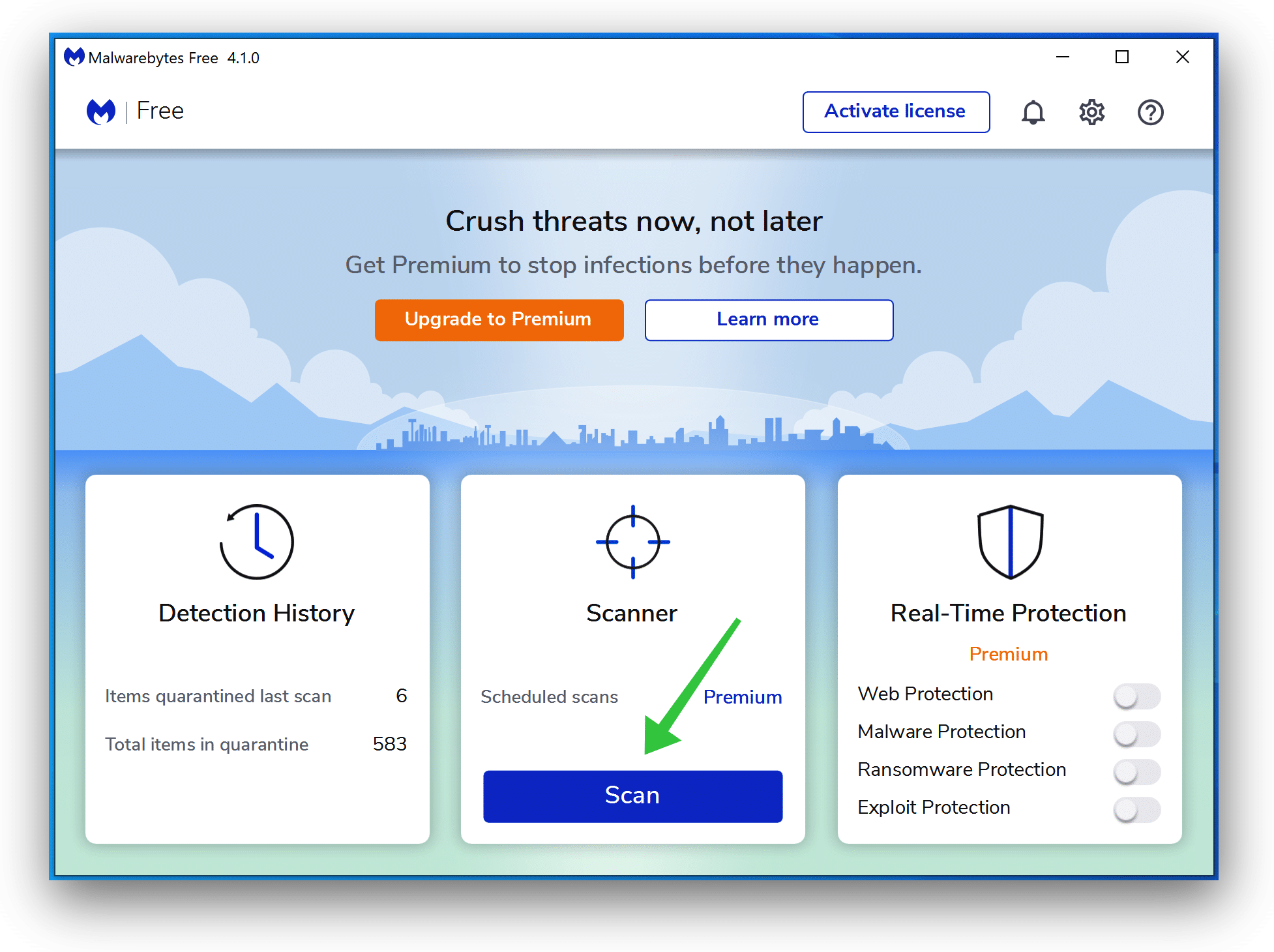
- Download Malwarebytes
- Install Malwarebytes, and follow the on-screen instructions.
- Click Scan to initiate a malware scan on your PC.
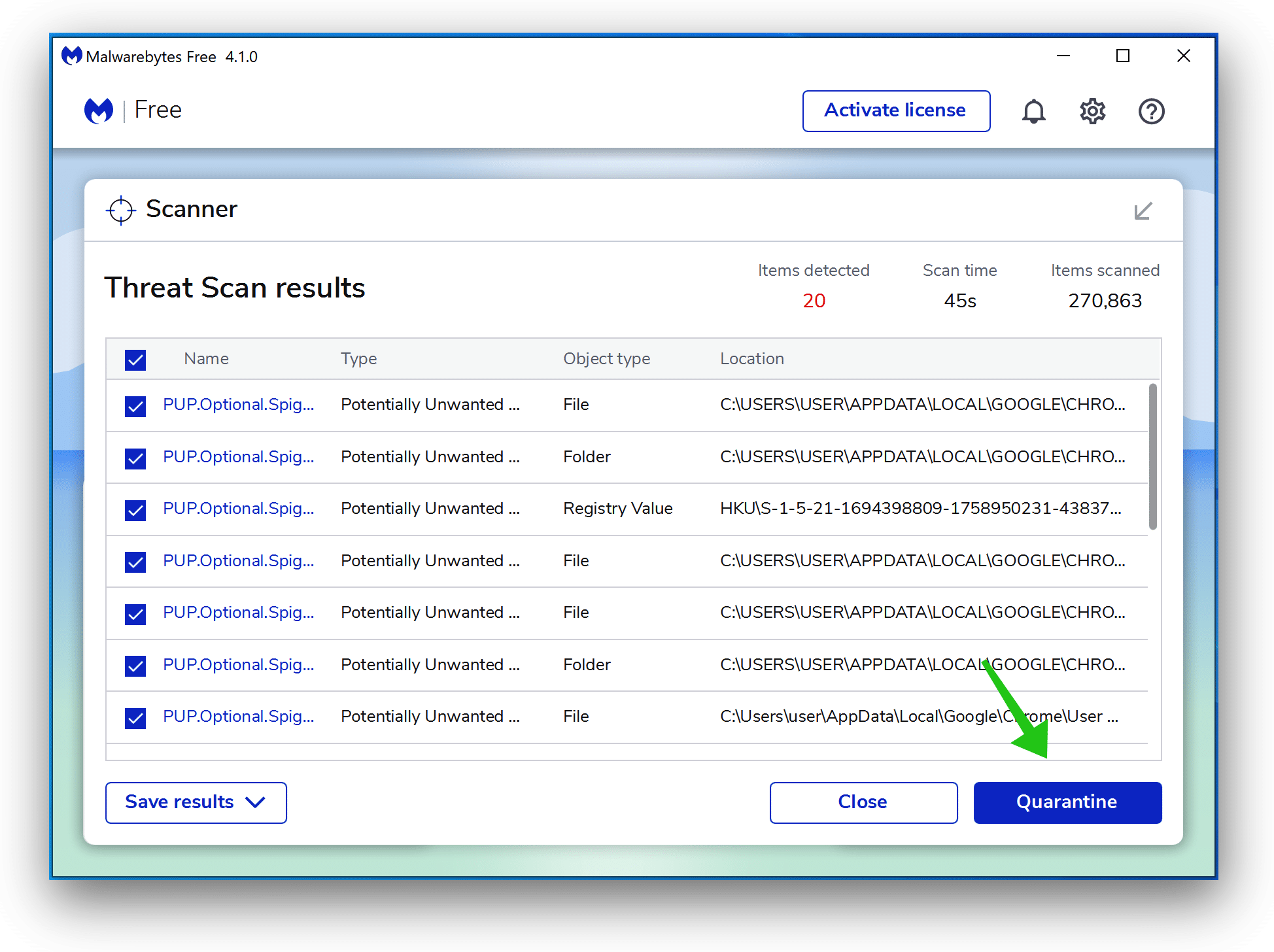
- Wait for the Malwarebytes scan to finish.
- Once completed, review the malware detections.
- Click Quarantine to continue.
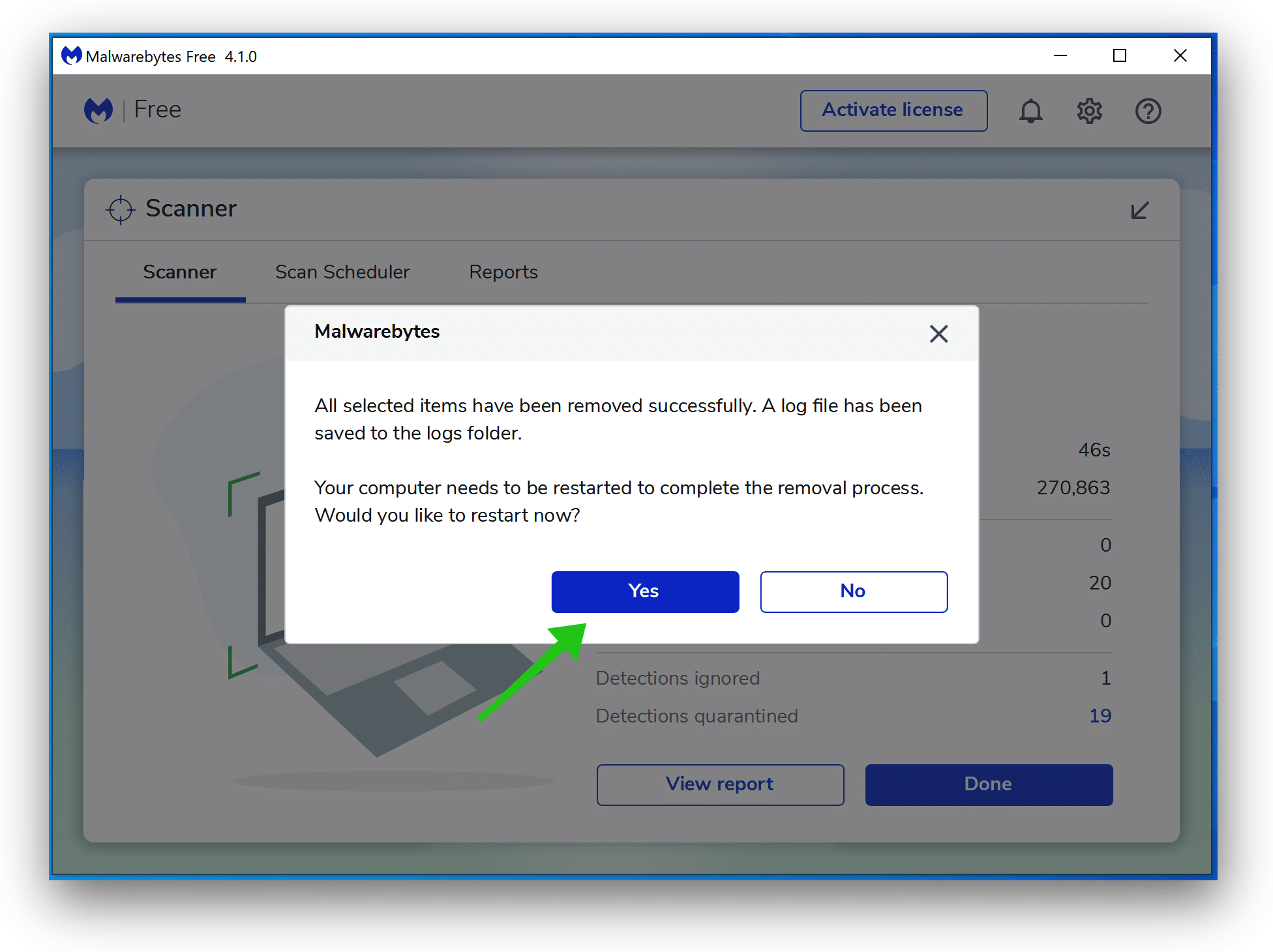
- Reboot Windows after all the malware detections are moved to quarantine.
Malwarebytes
Malwarebytes is a malware removal app that helps detect and remove threats from your Windows computer. The free version lets you run manual scans and quarantine detected threats. A paid subscription adds real-time protection to help prevent new infections.
Follow the installation instructions, then open Malwarebytes.

-
Click "Scan" on the main dashboard to check your computer for malware.
-
Wait for the scan to finish. Malwarebytes will display a summary of the results.
-
Review the detected items. If threats have not already been quarantined, select them and click "Quarantine."
Quarantine isolates detected items to prevent them from running and causing further harm. If Malwarebytes asks you to restart your computer, follow the prompt to complete the removal process.
-
Click "View report" or "View Scan Report" to review the scan details.
-
If no threats were detected, click "Done" to close the scan summary.
Run Malwarebytes regularly to check for threats, especially if you notice suspicious behavior on your computer. You can continue using the free version for manual scans and malware removal. Ongoing real-time protection requires a paid subscription.
Thank me later 🙂 Please support my work and share this removal instruction with other people. Make sure other people do not become a victim of the Search.onfireshield.com browser hijacker virus.
